Fill all information details to consult with us to get services from us
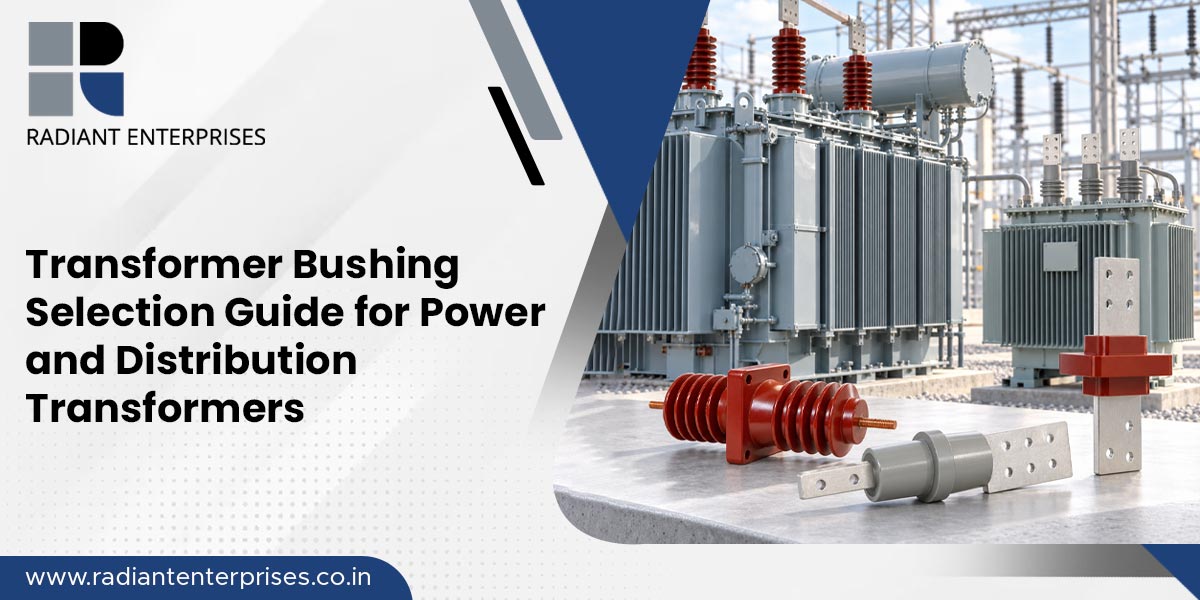
A transformer can run well for years, then one weak connection causes trouble. Heat builds, insulation wears, and small leaks begin to appear. At first, these signs may look harmless. We’ve seen how quickly such faults can grow. As a trusted transformer bushing supplier in India, Radiant Enterprises helps you choose bushings based on real working needs, not basic catalogue details.
A bushing carries an energised conductor through an earthed transformer tank. That sounds simple, but the part faces electrical, thermal, and physical stress every day. Dust, rain, heat, vibration, oil, and load changes all affect its life. The correct choice protects the transformer and reduces the risk of sudden shutdowns.
Many people tell us that two bushings can look almost the same. Yet small changes in voltage rating, current capacity, thread size, or insulation grade can alter how each one performs. As an epoxy bushing manufacturer in India, we encourage you to review the full duty before approving any design.
Radiant Enterprises works with transformer makers who need steady quality across every batch. We know that one wrong size can delay assembly or affect final tests. A clear data sheet saves time at each stage. It also helps us avoid changes after tools, moulds, or metal parts are ready.
Power and distribution transformers do not place the same demands on bushings. A distribution unit may serve homes, farms, shops, or a small plant. A power transformer may handle much higher voltage, load, and fault stress. Your first step should be to define where the bushing will work.
As an epoxy terminal bushing manufacturer in India, we ask you to share the transformer type, voltage class, current rating, and mounting plan. These details help us understand the contact points and space limits. Without this data, even a well-made part may not fit the unit correctly.
Voltage is more than the number printed on a transformer plate. The bushing must also cope with short voltage surges caused by lightning or switching. Insulation must remain sound during normal use and brief stress events. Radiant Enterprises reviews rated voltage and withstand needs before suggesting a suitable design.
A skilled transformer bushing supplier in India should ask about the highest system voltage, power-frequency withstand level, and impulse level. This checks both daily operation and sudden electrical stress. Choosing only from nominal voltage can leave too little safety margin for actual site conditions.
Clearance and creepage distance also matter. Clearance is the shortest path through air between live and earthed parts. Creepage is the path along the insulation surface. Dust, salt, moisture, and chemical fumes can lower surface strength, so outdoor sites may need a longer creepage path.
Current creates heat as it passes through the conductor and terminal joints. A bushing that runs too close to its limit may age faster. Loose contact surfaces can make this worse. Radiant Enterprises considers steady load, short overloads, conductor size, and terminal contact area during design review.
As a low voltage bushing exporter in India, we often see buyers focus on voltage while current gets less attention. Both ratings matter. You should share the normal current, possible overload, and short-circuit duty. This helps us select suitable metal parts and safe contact areas.
Ask these practical questions:
Epoxy resin offers a useful mix of electrical strength, shape control, and low weight. It can support detailed moulded forms and close size limits. It also avoids the sharp fragments linked with broken porcelain. Still, resin grade, filler mix, curing, and mould control affect the final result.
As an epoxy bushing manufacturer in India, Radiant Enterprises pays close attention to the moulding process and metal-resin bond. Air gaps, poor curing, or trapped moisture can weaken insulation. Good process control helps keep each batch stable in size and electrical performance.
Porcelain remains useful in many outdoor and high-voltage duties. Epoxy may suit compact indoor units, low-voltage terminals, bus ducts, panels, and distribution transformers. No material is right for every job. The choice must follow voltage, site conditions, available space, and the required service life.
Maybe your transformer will sit in a clean indoor room. Maybe it will work beside a coast, factory, mine, or dusty road. These settings place very different demands on the insulation surface. We’ve seen this happen often: a suitable indoor design gets used outdoors, then tracking marks appear much sooner than expected.
An experienced epoxy terminal bushings manufacturer in India will consider humidity, pollution, heat, cold, and sunlight. Outdoor resin parts may need added resistance to weather and surface ageing. Indoor parts still need protection from dust, moisture, and poor airflow around live connections.
Radiant Enterprises asks about site height as well. Air becomes less dense at higher locations, which can affect external insulation performance. If the transformer will work above standard test conditions, tell us before design approval. A later change may affect dimensions, tooling, and assembly space.
A bushing must fit the transformer without strain. Flange size, stud length, thread form, gasket face, and tank opening must align. Even a small mismatch can cause oil leakage, weak sealing, or poor terminal contact. Drawings should show all key sizes and tolerances clearly.
As a low voltage bushing exporter in India, we advise buyers to confirm cable pull, busbar weight, and assembly force. A terminal can carry current well yet fail under excess physical load. Packing must also protect threads and insulation surfaces during long road or sea travel.
A test report gives you facts before parts enter regular production. Depending on the design and agreed standard, checks may cover dimensions, visual finish, power-frequency withstand, insulation resistance, leakage, temperature rise, and mechanical strength. Test needs should be settled before the purchase order.
As an epoxy bushing manufacturer in India, we believe sample approval is worth the time. It lets you check fit, finish, mounting, and electrical results before a large batch begins. Radiant Enterprises can work from your drawing or help refine key sizes around the transformer design.
Standards such as IEC 60137 guide many bushing ratings and tests above 1,000 volts. Project needs can still differ by market or buyer. Share the required standard, test voltage, acceptance limits, and document format early. This avoids confusion during inspection and dispatch.
The lowest price can look attractive when many units are involved. Yet a failed bushing may cost far more through oil loss, rework, site visits, or transformer downtime. A fair review should include service life, batch control, packing, lead time, and support after delivery.
A dependable transformer bushing supplier in India should discuss risks openly and ask clear questions. We should not push a standard part when your transformer needs a change. The aim is to supply a bushing that fits well, stays cool, seals correctly, and performs as planned.
Before placing an order, sit with the drawing and read each detail once more. Check voltage, current, material, creepage, mounting, terminal form, gasket, and test needs. If one point feels unclear, resolve it before production. Ten careful minutes can prevent weeks of correction.
As an epoxy terminal bushings manufacturer in India, Radiant Enterprises supports clear technical talks from the first enquiry. We want you to feel sure about the chosen part, not rushed into approval. Good results usually begin with honest data, a sound drawing, and shared expectations.
For overseas orders, delivery care matters just as much as product quality. As a low voltage bushing exporter in India, we plan packing around handling, moisture risk, and transit distance. Clean labels and batch records also make checks easier when material reaches your works.
The right bushing may be a small part of a large transformer, but its job is vital. Radiant Enterprises brings practical manufacturing care to each order. When voltage, current, site conditions, fit, and tests are reviewed together, you gain a safer choice and fewer unwelcome surprises.
A transformer bushing carries an energised conductor safely through the earthed tank. It keeps current away from the tank and nearby metal parts.
Match the bushing with system voltage, load current, insulation level, mounting size, site conditions, connection type, and the required test standard.
No. You must also check current, impulse strength, creepage distance, short-circuit duty, mounting angle, terminal size, site height, and pollution levels.
An undersized bushing can overheat during normal use or peak demand. This heat may weaken insulation, damage joints, and shorten transformer life.
Epoxy bushings are light, compact, and well suited to many indoor uses. Porcelain often suits demanding outdoor duties and higher voltage needs.
Creepage distance is the path along the insulation surface between live and earthed parts. Polluted or wet sites often need a longer path.
Choose a bushing with enough creepage distance and strong surface insulation. Salt, dust, moisture, and fumes can raise the risk of flashover.
Share voltage, current, drawing, thread size, tank opening, mounting method, gasket details, terminal type, insulation medium, site conditions, and test needs.
Tests may include size checks, visual checks, insulation resistance, power-frequency withstand, temperature rise, leakage, partial discharge, capacitance, and dissipation factor tests.
Watch for cracks, oil leaks, burn marks, surface tracking, unusual heat, loose terminals, strange noise, rising test values, or damaged sealing parts.
Check bushings during planned transformer care and after faults or severe weather. The right schedule depends on voltage, age, load, and site conditions.
Radiant Enterprises reviews your ratings, drawings, site needs, and mounting details. We help you choose a bushing that fits and performs as planned.