Fill all information details to consult with us to get services from us
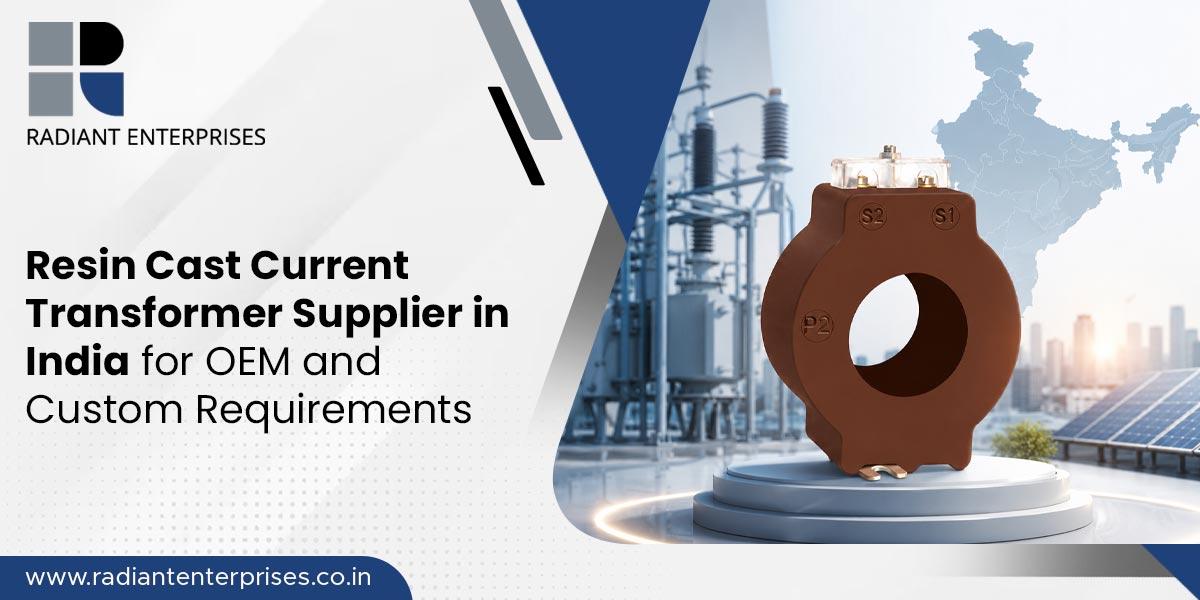
You may have faced this before. A current transformer looks right on paper but fails to fit your panel. The size may be wrong, the terminals may feel awkward, or test results may raise doubts. As a Resin cast CT manufacturer in India, we understand how one small mismatch can delay a full project. At Radiant Enterprises, we begin by listening to your actual needs before discussing the product.
Many people tell us that finding a current transformer is easy. Finding one that suits a real project is much harder. A catalogue model may meet the basic rating but miss the available space, mounting style, or terminal position. These small details often become large problems during panel assembly.
We’ve seen this happen often. An OEM team completes the panel design, orders the CT, and later finds a fitting issue. The panel must then be changed, which affects wiring, testing, cost, and delivery. As a Resin cast current transformer manufacturer in India, we work closely with your team before production begins.
At Radiant Enterprises, we ask simple but useful questions. Where will the CT be installed? What conductor size will pass through it? How much space is available? Which relay or meter will receive the output? These answers help us avoid guesswork and plan the right unit.
A current transformer reduces high current to a lower value that meters and relays can handle. This allows your system to measure load current without sending full line current into the control device. It also gives safe electrical separation between the main circuit and connected equipment.
The resin body protects the inner parts from dust, moisture, and daily electrical stress. A sound casting also supports the winding and core during use. The CT must still be chosen with care because resin alone cannot fix a poor electrical design.
Radiant Enterprises checks the purpose of each unit before suggesting a design. A metering CT must give useful accuracy across its stated range. A protection CT must pass fault current data to the relay without losing the details needed for safe action.
A short rating written in an enquiry rarely tells the full story. Two projects can share the same current ratio yet need very different CTs. One may serve an energy meter, while another may support a protection relay inside a switchboard.
As a Resin cast current transformer supplier in India, we request the details that shape safe and steady performance. Clear data at this stage saves several rounds of changes later. It also helps our team offer a practical design instead of a close-looking substitute.
You may not have every detail ready. That is fine. Our team can review your drawing, earlier sample, or basic panel layout. At Radiant Enterprises, we try to make this stage clear and useful, not tiring.
OEM work often moves through tight design and delivery plans. A change in one part can affect the whole panel. Your CT must fit the assembly, match the circuit, and remain easy to wire during regular production.
As a Resin cast CT manufacturer in India, we support custom needs such as window size, body shape, mounting points, and terminal placement. We can also review marking needs and mechanical limits. Each change must still support the required electrical performance and safe use.
A custom request should never begin with mould work alone. We first study the electrical rating, insulation need, heat rise, and space around the unit. Once these points are clear, we can shape the mechanical design around your panel.
Radiant Enterprises also understands repeat orders. An OEM needs the next batch to match the approved unit in fit and function. Clear drawings, agreed specifications, process checks, and controlled records help us keep each batch steady.
Custom resin cast CTs can support many types of electrical equipment, including:
The right design always depends on the actual system. We avoid treating every application as the same because load, fault level, space, and duty can change from one project to another.
At first, a minor test difference may not seem important. Yet that difference can affect meter readings or relay response after the CT enters service. Careful testing helps confirm that the finished unit matches the agreed specification.
Radiant Enterprises plans checks around the CT type and project need. These may cover current ratio, polarity, winding resistance, accuracy, insulation, and withstand needs. Extra checks can also be discussed when your project or end client asks for them.
Testing is not just a final form to sign. It helps us find a concern before dispatch, when correction is still possible. It also gives your quality team useful records during incoming inspection and final panel approval.
Export work adds another layer to the order. Packaging, markings, documents, batch details, and shipping conditions must be planned with the product. A correct CT can still cause trouble if the outer label or test record does not match the purchase order.
As a Resin cast current transformer exporter in India, we review the destination, packing need, document list, and delivery plan with you. This helps reduce avoidable questions during inspection, dispatch, and receipt.
We also understand that overseas projects may follow different customer specifications. Your enquiry may refer to IEC needs, a project document, or an approved drawing. Our team reviews those points before confirming what can be supplied.
At Radiant Enterprises, we keep communication direct during export orders. If a detail is missing or conflicts with another requirement, we raise it early. Clear answers before production protect both the schedule and the final installation.
Price matters, but it is rarely the only concern. A low quote loses its value when the CT arrives late, fails inspection, or needs panel changes. A better choice gives you clear answers before the order and steady support after approval.
When assessing a Resin cast current transformer manufacturer in India, ask how the design details will be checked. Ask which tests will be carried out and what records will be shared. Also confirm how custom changes and repeat batches will be controlled.
Good communication should feel simple. You should know what information is needed, what can be made, and how long each stage may take. At Radiant Enterprises, we aim to give practical answers that help your purchase, design, and quality teams move together.
A clear enquiry helps us respond with fewer questions. It does not need to be long, but it should show the key electrical and mechanical needs.
As a Resin cast current transformer exporter in India, we also need packing, marking, and document details for overseas orders. Early planning helps us prepare the unit and shipment around the same approved requirements.
Maybe your project needs a small change to an existing CT. Perhaps you need a new design built around a tight panel space. You may also be replacing an old unit with limited drawings available. These situations need patient review, not a rushed product match.
Radiant Enterprises works with OEMs, panel builders, project teams, and industrial buyers who need clear technical support. As a Resin cast current transformer supplier in India, we focus on fit, rating, testing, and repeat order needs from the start.
Send us your specification, drawing, sample details, or application notes. We’ll review the information and discuss the next step with you. The goal is simple: a resin cast CT that fits your equipment, supports safe measurement, and reaches your project ready for use.
A resin cast current transformer lowers high current into a safe value. This allows meters and protection relays to read current with care.
Choose a primary rating close to your normal load current. The secondary rating must also match the connected meter or protection relay.
Share the current ratio, voltage, accuracy class, burden, window size, mounting style, terminal position, quantity, panel drawing, and test needs.
Yes. The body, window, terminals, and fixing points can be planned around the available space while keeping the required electrical performance.
A metering CT supports accurate current readings during normal loads. A protection CT gives relays useful fault data during unsafe current conditions.
Accuracy class shows how closely the CT output follows the real current. The right class supports fair metering and sound relay response.
Excess burden can reduce accuracy and affect connected devices. Include meter, relay, cable, and terminal loads when checking the total burden.
Ask for ratio, polarity, accuracy, winding resistance, insulation, and power frequency tests. Dimensional and marking checks also help prevent site issues.
Yes. Share clear photos, ratings, panel measurements, terminal details, and the old sample when possible. These details help us plan a close match.
Use one approved drawing and fixed test needs for each order. Controlled records help maintain the same fit, ratings, markings, and terminal layout.
Document needs vary by country and project. Buyers often request approved drawings, test reports, packing details, labels, invoice data, and inspection records.
An open secondary can create unsafe voltage and harm accuracy. Keep it connected to its load or safely shorted by trained staff.