Fill all information details to consult with us to get services from us
A panel upgrade can look straightforward until a voltage reading raises doubt just before handover. We understand the pressure of checking drawings, answering site calls, and keeping a project moving. At Radiant Enterprises, we build our Potential transformer for switchgear in India around the need for dependable voltage signals. We want you to trust the readings behind each decision, from the first test to daily service.
That trust matters when you add a feeder, expand a factory, or renew an ageing substation. We can fit new screens and controls, but useful decisions still depend on sound measurements. This is where a small part inside a panel carries a much larger responsibility.
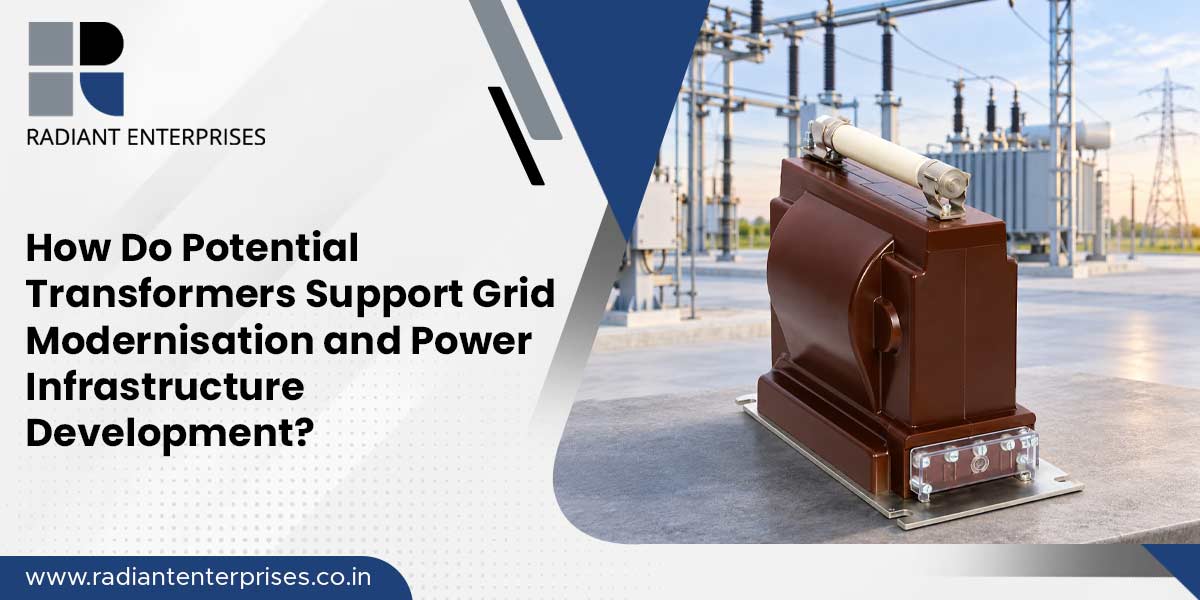
We use potential transformers, also called voltage transformers, to reduce high voltage to a standard, lower level. This gives connected meters and relays a voltage signal while keeping primary and secondary circuits electrically separate. We select the ratio and ratings to suit your system.
For your project, this means we can provide the voltage input needed to check supply conditions. Alongside current measurements, that input supports energy metering and power calculations. We gain a clearer view of what your network is doing, rather than relying on an incomplete picture.
We do not expect a potential transformer to correct poor voltage or increase network capacity. Our role is to provide a dependable measurement input. We then rely on the wider control and protection scheme to respond.
A sudden trip can leave you facing stopped production, missed schedules, and difficult questions. We know a dependable supply means more than keeping a light on. Your equipment needs protection that responds to the right conditions.
At Radiant Enterprises, we supply voltage transformers for use with suitable protection relays. We match the voltage signal requirements to the planned scheme, including functions for low or high voltage. Where the design calls for directional protection, we consider the voltage input alongside current signals.
We also keep the limits clear: the transformer supplies the measurement, while the relay assesses conditions. The circuit breaker interrupts the circuit when instructed. We need each part, its settings, and its wiring to work together.
When you open a crowded panel, space and access quickly become real concerns. We need insulation, terminals, and mounting points to fit without making future checks harder. A neat drawing alone cannot settle every site detail.
Our Epoxy resin potential transformer in India uses cast insulation around internal parts. At Radiant Enterprises, we consider insulation needs alongside the electrical ratings and mounting arrangement. We also check whether the proposed service conditions suit the product.
We do not treat resin casting as permission to ignore heat, dirt, or moisture. Indoor equipment still needs a suitable enclosure and the right clearances. We review these conditions early because a poor fit can become a lasting maintenance concern.
You may be adding remote monitoring because travelling to every site takes too much time. We understand the value of seeing a voltage change without waiting for a phone call. Yet a screen is only useful when the input deserves your trust.
As an OEM potential transformer manufacturer in India, we help match our product to your equipment design. At Radiant Enterprises, we review the required voltage ratio, output, accuracy class, and physical fit. These details help you connect measurement hardware to the planned control system.
We can use conventional voltage transformers within a digital substation through suitable interface equipment, such as merging units. The interface converts analogue measurements into digital data. We still need to check the full signal chain, including wiring and device settings.
An older panel often comes with fixed space, limited records, and a short shutdown window. You may need better monitoring while keeping much of your existing equipment. We start by understanding those limits.
When we supply a Potential transformer for switchgear in India for an upgrade, we review more than the rated voltage. We check dimensions, terminals, access, and the connected devices. At Radiant Enterprises, we use your drawings and service details to guide that review.
This matters when you replace older meters with electronic units that draw less power. We check burden, meaning the load connected to the secondary circuit. We must keep the actual load within the range covered by the specified accuracy.
A new industrial area, rail project, or solar connection adds more points to monitor. We need dependable voltage inputs wherever the scheme requires measurement and protection. At solar connection points, we use those readings within the wider monitoring and protection design.
Our work as an OEM potential transformer manufacturer in India also involves agreeing project details before production. We review drawings, quantities, ratings, and delivery needs with you. Clear approvals help prevent changes from reaching the site after panels are already built.
We want your project team to receive equipment that matches the agreed design. That means keeping technical records clear across purchasing, panel building, and site work. A shared reference helps us resolve questions without repeating the same checks.
If you are ordering an Epoxy resin potential transformer in India, we begin with the intended duty. At Radiant Enterprises, we use the following details to review your requirement:
We also review risks linked to the network design. One is ferroresonance, an interaction between network capacitance and the transformer's magnetic core that can cause damaging voltages. Where relevant, we discuss suitable damping with your design team.
For us, being the Best potential transformer manufacturer in India means taking these details seriously. We want you to compare the agreed design, test evidence, and support against your needs. A broad promise cannot replace a clear technical review.
Once your site is live, you need clear records and practical access for checks. We encourage you to keep approved drawings, ratings, and test reports together. These records help you assess future changes without guessing how the original circuit was designed.
We also recommend checking the measurement circuit when you add or replace connected devices. A change in burden or wiring can affect the result you see. We want each upgrade to preserve the quality of the original measurement.
At Radiant Enterprises, we work to earn your trust as the Best potential transformer manufacturer in India through careful product selection and open technical discussions. Share your panel drawings and operating needs with us. We can review the voltage transformer requirement before you commit to manufacturing, helping you build power infrastructure with fewer unanswered questions.
Potential transformers provide reduced voltage signals for meters, relays, and controls. Accurate inputs support network monitoring, fault response, and informed decisions during grid upgrades.
No. A potential transformer measures voltage; it does not regulate supply voltage or increase network capacity. Separate control equipment handles voltage correction.
A potential transformer reduces voltage for measurement, while a current transformer reduces current. Both provide isolated inputs for suitable metering and protection equipment.
Potential transformers supply voltage inputs that help suitable relays detect abnormal conditions. The relay then sends a trip command when its protection settings require action.
Yes. Conventional potential transformers can connect to digital substation systems through suitable merging units. These devices convert analogue voltage inputs into digital measurement data.
Burden is the load connected to the secondary circuit. A mismatch with the specified accuracy range can affect readings, even when the voltage ratio matches.
No. Suitability depends on the rated service conditions and enclosure. Radiant Enterprises reviews insulation requirements, mounting details, and site conditions before recommending a design.
Check voltage ratings, accuracy class, burden, insulation level, dimensions, and terminal positions. Radiant Enterprises helps match these details to your switchgear design and operating conditions.
Potential transformers provide voltage measurements for metering, monitoring, and suitable protection functions at solar connection points. These inputs help connected systems assess grid conditions.
IEC 61869-3 covers inductive voltage transformers. Confirm applicable general requirements, Indian standards, project specifications, and required test reports before approving equipment for your installation.
Yes. As an OEM potential transformer manufacturer in India, Radiant Enterprises offers customised designs based on voltage class, mounting arrangement, insulation needs, and agreed specifications.
Share primary and secondary voltages, frequency, accuracy class, burden, insulation level, drawings, quantity, and site conditions. Radiant Enterprises uses these details to review your requirements.