Fill all information details to consult with us to get services from us
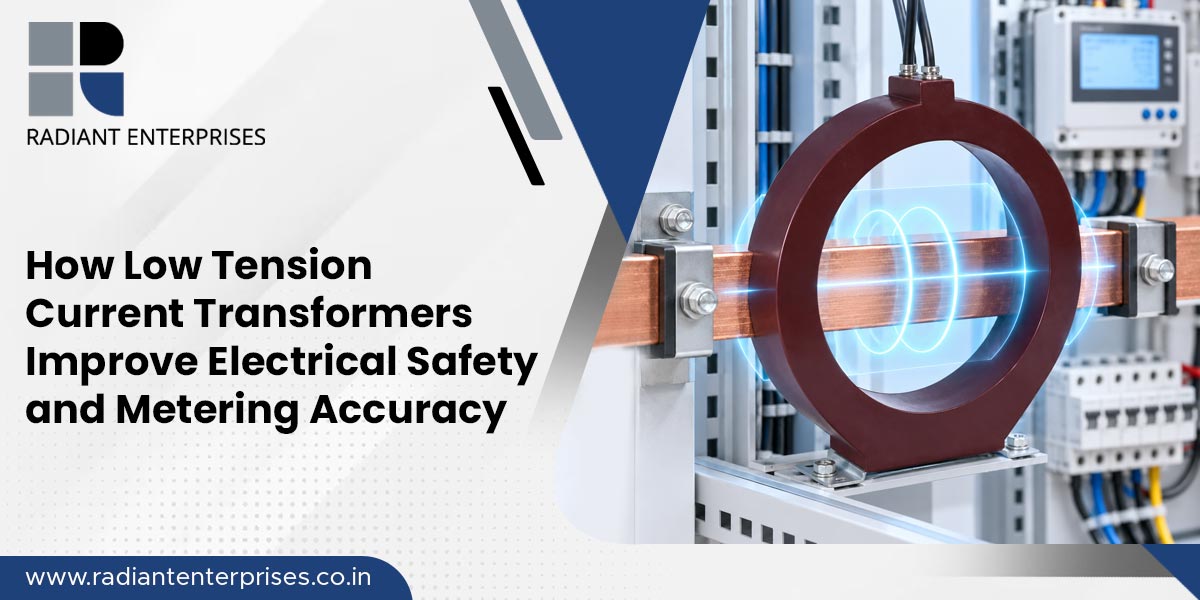
It usually starts with something small. A meter reading looks unusual, or a protective relay responds late. At first, the cause may seem hard to trace. A low tension current transformer helps prevent such issues by reducing high current to a safe value. At Radiant Enterprises, we know how much this small device affects daily safety.
High current cannot pass straight through a standard meter or protective device. Such direct contact could damage equipment and place people at risk. A current transformer creates a scaled current that instruments can read safely. It also keeps the measuring side apart from the main power circuit.
A low tension (LT) current transformer (CT) supports this task within low-voltage panels and systems. It gives meters and relays a clear current signal. This allows you to track energy use, spot unusual loads, and respond to faults without handling the full line current.
Many people tell us that a current transformer looks like a simple panel part. Yet its job carries real weight. A wrong ratio, loose terminal, or poor core can affect every reading. Radiant Enterprises pays close attention to each detail because small errors can create serious concerns later.
Think about a busy plant running several motors at once. The current may change each time a motor starts or stops. Sending that full current through a meter would be unsafe and unwise. The transformer lowers it to a standard output, often 1 A or 5 A.
A well-made low tension current transformer also offers electrical separation between the power conductor and the connected meter. This reduces direct exposure to high current. It helps protect measuring devices, wiring, and staff working around the panel.
This safety depends on correct use. A current transformer secondary must never remain open while current flows through the primary side. An open secondary can develop a dangerous voltage. Proper shorting links, terminal covers, earthing, and safe work steps help control this risk.
Maybe you have seen energy figures that never seem to match the actual load. Such gaps can affect bills, plant reports, and daily choices. Metering accuracy begins with a stable input signal, not with the display alone. Radiant Enterprises designs products with this practical need in mind.
A suitable low tension (LT) current transformer (CT) reproduces the main current at a smaller and known ratio. For example, a 500/5 A unit should give 5 A when the primary current reaches 500 A. The meter then uses this value to show actual current and energy use.
Accuracy can change when the connected load exceeds the rated burden. Long cable runs, thin wires, extra meters, and weak joints can add unwanted load. A correct burden choice helps the transformer stay within its stated accuracy class during normal use.
For steady and useful readings, we ask you to check:
As a low voltage current transformer manufacturer in India, we encourage you to share real working details before choosing a unit. Panel space matters, but electrical data matters more. A good fit comes from both physical size and correct electrical ratings.
At first glance, metering and protection units may appear alike. Inside, each design serves a different purpose. A metering CT aims to stay accurate around normal working current. A protection CT must send a useful signal during fault current so a relay can act.
Using the wrong type can lead to poor readings or delayed fault response. A metering unit may saturate during a major fault by design. This can help limit the current reaching a meter. A protection unit needs a suitable knee point and accuracy limit for relay work.
Radiant Enterprises helps clients review the intended use before final selection. We discuss ratio, burden, class, system current, and mounting needs. This simple talk can stop costly changes once a panel reaches the testing stage.
A trusted low voltage current transformer supplier in India should help you compare technical details, not just prices. A lower price offers little comfort when readings drift or a relay receives the wrong signal. Clear product data supports a safer buying choice.
A small current error may not look serious during one shift. Over several months, the same error can affect cost reports, energy checks, and machine-level study. It may also hide overloads or make a healthy circuit look wasteful.
A stable low tension current transformer gives your team data that feels dependable. Better readings help you compare loads, find unusual energy use, and plan maintenance. You can act with more confidence because the figures reflect what the system is doing.
We have seen how much relief comes from finding the real cause of a reading error. Sometimes the meter is blamed first. The actual concern may be an incorrect CT ratio, reversed polarity, excess burden, or a loose secondary joint.
Choosing a unit only by window size can create trouble. The rated current, frequency, class, burden, insulation level, and installation type must also suit the system. Radiant Enterprises reviews these details to support a sound and practical choice.
A skilled low voltage current transformer manufacturer in India can use this information to guide product selection. Custom needs may include a special window, compact body, chosen terminal position, or a mounting change. Each choice should support safe fitting and sound electrical work.
Even a well-made CT can give poor results after a careless installation. Polarity marks must match the wiring plan. Secondary terminals must remain tight, clean, and easy to inspect. The unit should also sit firmly without strain from nearby cables or busbars.
A dependable low voltage current transformer supplier in India can provide clear product markings and rating details. These details help your panel builder connect each unit correctly. Radiant Enterprises also values clear communication because unclear labels can waste time during testing.
Before energising the system, we suggest checking:
A low tension (LT) current transformer (CT) should also be tested as part of the complete metering or protection circuit. Ratio, polarity, insulation, and secondary continuity checks can reveal errors before normal operation begins.
Projects for overseas markets often involve different panel layouts, test records, packing needs, and document formats. Clear discussion at the start avoids confusion later. Product labels, terminal markings, quantities, and drawings must remain easy to match.
As a low voltage current transformer exporter in India, Radiant Enterprises understands that product quality is only one part of the order. Safe packing, clear records, and steady updates also matter. You need confidence that each unit will arrive ready for the intended panel.
Local voltage levels and project rules can vary across markets. We ask you to share the required standards, system data, and approval needs early. This gives enough time to review technical points before production starts.
A current transformer does not need daily adjustment, but it should not be forgotten. Heat marks, dust, loose terminals, cracked insulation, and unusual meter behaviour deserve attention. Routine checks can catch these signs before a shutdown occurs.
A reliable low voltage current transformer supplier in India should remain helpful after dispatch. Radiant Enterprises supports product discussions when your team needs clarity about ratings, use, or fit. That support can make fault finding less stressful.
The same care matters for exported systems. A low voltage current transformer exporter in India must consider transit, storage, handling, and site conditions. Strong packing protects the unit, while clear documents help the receiving team check each item without delay.
Most people never notice a CT when everything works well. Yet accurate bills, useful energy reports, and timely relay action often depend on its signal. That quiet role makes correct design and selection worth serious thought.
As a low voltage current transformer manufacturer in India, Radiant Enterprises focuses on products that support safe current sensing and accurate measurement. We also help you match the unit with your system instead of leaving the choice to guesswork.
A low voltage current transformer exporter in India must earn trust through steady quality, clear details, and responsible support. We take that duty seriously because every supplied unit becomes part of a working electrical system.
When you choose a low tension (LT) current transformer (CT), look beyond size and price. Ask about ratio, class, burden, insulation, testing, and intended use. A careful choice today can support safer work and more dependable readings for years.
A low tension current transformer lowers high current to a safe value. This lets meters and protective relays read current without direct exposure.
It keeps measuring devices apart from the main current path. This helps reduce equipment damage, unsafe contact, and risk during current measurement.
Yes. A correctly chosen CT sends a scaled and steady current signal. The meter can then record energy use with far better accuracy.
Choose a primary rating just above the normal operating current. An oversized ratio may give weak accuracy when the actual current stays low.
CT burden is the total load from meters, relays, wires, and terminals. Too much burden can cause poor readings and higher measurement errors.
The right class depends on the meter and required reading quality. Billing and energy checks often need a more accurate class than basic monitoring.
No. Metering and protection CTs respond differently during fault current. Using the wrong type may affect relay response or damage connected instruments.
An open secondary can create dangerous voltage, excess heat, and core magnetisation. Always short the terminals before removing a connected meter or relay.
5 A output suits many standard meters. 1 A output may reduce cable losses when the meter sits far from the CT.
Common causes include reversed polarity, loose terminals, wrong ratios, excess burden, long wires, poor joints, and incorrect connections between the CT and meter.
Check each CT during planned panel maintenance. Look for heat marks, cracks, dust, loose terminals, unusual noise, and changes in meter readings.
Yes. Radiant Enterprises can support custom ratios, window sizes, mounting needs, and terminal positions based on your panel design and electrical requirements.